Reading books has been one of the most valuable sources of knowledge and personal development for centuries. Even in today’s digital age, where information is easily available online, books remain a powerful tool for learning, imagination, and mental growth.
People who read regularly often develop stronger critical thinking skills, better vocabulary, and deeper understanding of the world. Reading is not only educational but also improves mental well-being and creativity.
This article explores the importance of reading books, the mental benefits it provides, and how to develop a consistent reading habit.
Why Reading Is Important
Books provide knowledge, insights, and perspectives that help individuals grow intellectually and emotionally.
Unlike short online content, books allow readers to explore topics in depth, helping them understand ideas more clearly.
Key reasons why reading matters
- Expands knowledge and understanding
- Improves communication skills
- Enhances imagination and creativity
- Reduces stress and improves focus
Reading regularly can become a lifelong habit that supports continuous learning and self-improvement.
Mental Benefits of Reading Books
Reading has a strong impact on the brain and cognitive development.
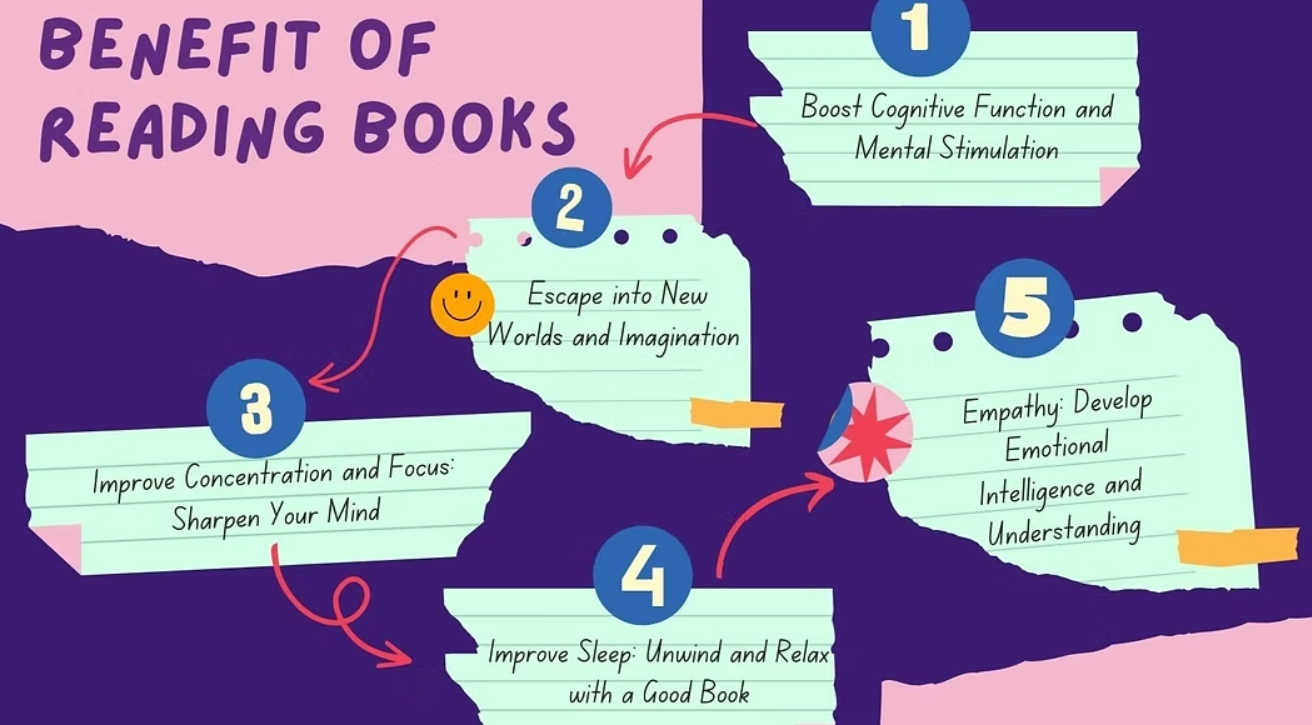
1. Improves Brain Function
Reading stimulates multiple areas of the brain responsible for language, memory, and comprehension.
When you read, the brain actively processes information, strengthening neural connections and improving mental agility.
2. Expands Vocabulary and Language Skills
Books expose readers to a wide variety of words and expressions.
Over time, this helps improve:
- Vocabulary
- Writing skills
- Communication abilities
People who read frequently often express their ideas more clearly and confidently.
3. Enhances Focus and Concentration
Unlike short online content, books require sustained attention.
Regular reading trains the brain to focus on a single activity for longer periods, improving concentration in other areas of life such as work or study.
4. Stimulates Imagination and Creativity
Reading stories and descriptive content encourages the brain to create mental images and scenarios.
This stimulates creativity and helps readers think more innovatively.
Creative thinking is useful in many areas such as problem-solving, art, business, and writing.
5. Reduces Stress
Reading can be a relaxing activity that allows the mind to temporarily escape from daily pressures.
Research shows that reading for just 15–30 minutes can significantly reduce stress levels and improve mood.
6. Improves Memory
When reading a book, readers must remember characters, events, and information from previous chapters.
This mental exercise strengthens memory and cognitive function.
7. Encourages Lifelong Learning
Books provide access to knowledge from experts, researchers, and thinkers across many fields.
Through reading, individuals can learn about:
- History
- Science
- Psychology
- Business
- Personal development
This continuous learning contributes to intellectual growth and curiosity.
Types of Books That Support Mental Growth
Different types of books offer unique benefits.
Fiction
Fiction books improve imagination, empathy, and emotional understanding.
Stories allow readers to experience different perspectives and cultures.
Non-Fiction
Non-fiction books focus on factual information and practical knowledge.
Examples include books on:
- Science
- Psychology
- Self-development
- History
- Business
These books provide insights that can help readers develop new skills and knowledge.
Educational Books
Educational books help students and learners understand academic subjects more deeply.
They provide structured explanations and examples that support learning and critical thinking.
How to Build a Reading Habit
Many people want to read more but struggle to maintain the habit.
Here are some practical strategies to help build a consistent reading routine.
1. Start with Small Reading Goals
Begin by reading 10–15 minutes per day.
Small daily reading sessions can gradually develop into longer habits.
2. Choose Books That Interest You
Reading should feel enjoyable, not forced.
Choose topics that genuinely interest you, such as:
- Personal development
- Technology
- Adventure stories
- Biographies
Interest keeps motivation high.
3. Create a Reading Routine
Reading at the same time each day helps reinforce the habit.
Popular reading times include:
- Before bedtime
- During morning routines
- During commuting or breaks
Consistency helps reading become part of your daily lifestyle.
4. Reduce Digital Distractions
Smartphones and social media can interrupt reading sessions.
Turning off notifications or reading in a quiet space can improve concentration.
5. Keep a Reading List
Maintaining a list of books you want to read can help maintain motivation.
Completing books on the list provides a sense of achievement and progress.
The Long-Term Impact of Reading
People who read regularly often experience long-term benefits such as:
- Greater knowledge and wisdom
- Improved communication skills
- Stronger imagination
- Better analytical thinking
- Enhanced emotional intelligence
These qualities contribute to personal and professional success.
FAQs About Reading Books
1. How many minutes should I read each day?
Reading for 20–30 minutes daily is enough to gain significant mental benefits.
2. Are digital books as effective as physical books?
Yes. Both formats can provide similar learning benefits as long as the reader stays focused.
3. Can reading improve intelligence?
Reading improves knowledge, vocabulary, and analytical thinking, which contribute to intellectual growth.
4. What types of books are best for beginners?
Beginners should start with simple and engaging books that match their interests.
5. Does reading help mental health?
Yes. Reading can reduce stress, improve mood, and provide mental relaxation.
Conclusion
Reading books is one of the most effective ways to stimulate mental growth and expand knowledge. By engaging the brain, improving focus, and encouraging imagination, reading supports both intellectual and emotional development.
Developing a reading habit does not require large amounts of time. Even short daily reading sessions can provide long-term benefits.
In a world full of distractions, books remain a valuable resource for learning, creativity, and personal growth. By making reading a regular habit, individuals can continue to grow mentally and gain deeper understanding of the world around them.